
The Problem With the Latest AI Literary Scandal Isn’t Actually the AI
By Stacy Lee Kong
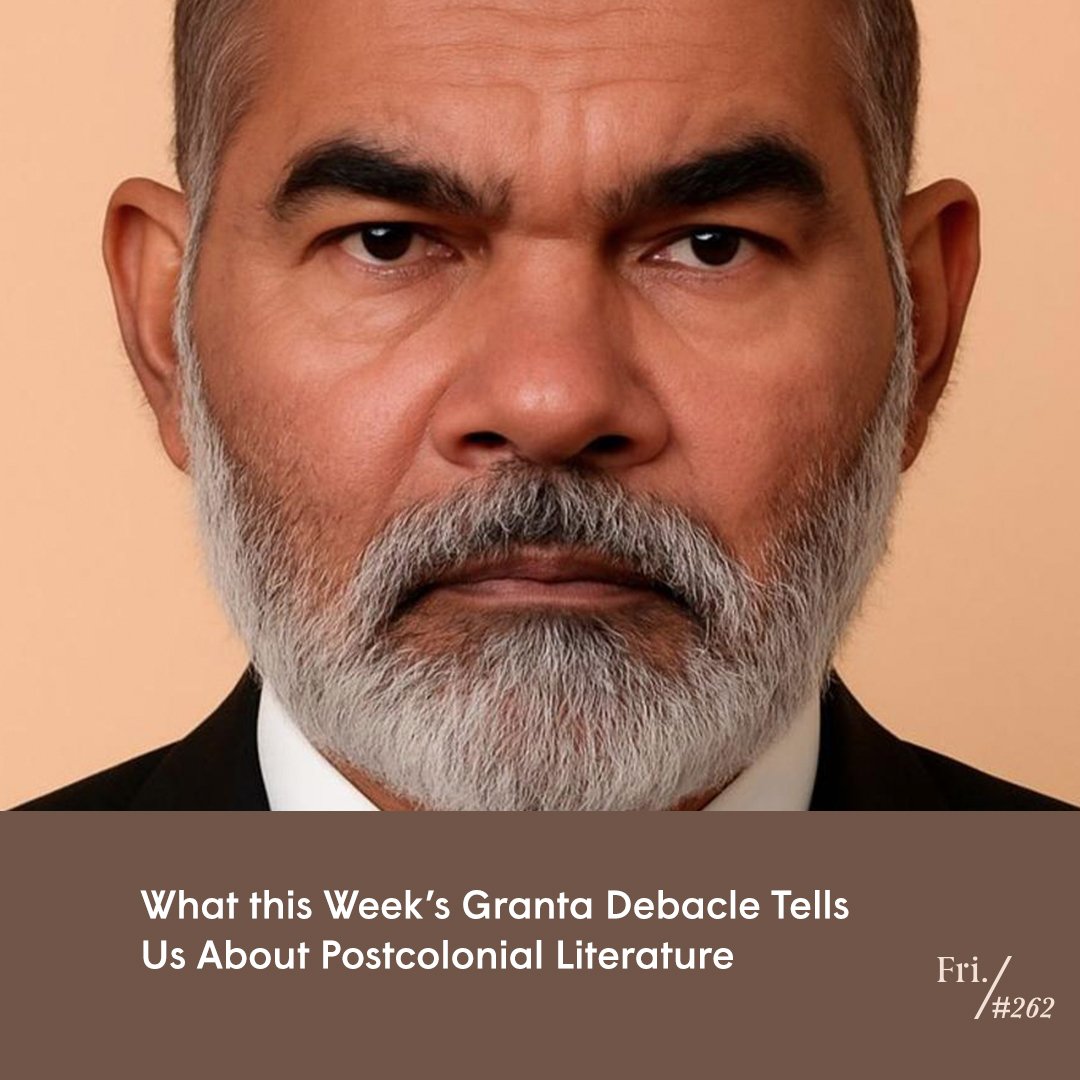
Image: Commonwealth Foundation
I didn’t expect to be writing about AI again quite so soon, but there is a scandal currently rocking the literary world, and we kind of have to talk about it.
A quick recap: every year, the U.K.-based Commonwealth Foundation awards prizes for short stories by authors from across the Commonwealth—also known as the remnants of Britain’s colonial empire—with winners in five regions: Africa, Asia, Canada and Europe, Caribbean and Pacific. Each regional story is chosen by a panel of judges and collectively, they’re meant to “represent the very best of contemporary short fiction from across the Commonwealth.” (That’s a direct quote from the Foundation’s website, btw.) They’re so excellent that they get published in the prestigious lit magazine Granta, before advancing to a final round where one is crowned the overall winner. It’s all very exciting, if a bit niche. But this year? Not so niche. Publications from Defector and Wired to the Independent, New York Times and The Guardian are covering it, and my social feeds are full of online commenters who have been weighing in on the winners… because almost as soon as these stories went live on Granta’s site over the weekend, people began questioning if one of them—"The Serpent in the Grove” by Trinidadian author Jamir Nazir—had been generated using AI.
Really interesting tweet (and sharp-eyed comparison) because, it seems to me at least, there's a disingenuous effort by the AI industry to gaslight us all by saying "see? It's just like human writing!" when of course we can see that it's not https://t.co/ebRLwypTHs
— Heidi N. Moore (@moorehn) May 20, 2026
And honestly, it probably was. It contains lines like, “They called her Zoongie. Maybe it was a name; maybe rain took a shape and decided to keep it. She had the kind of walking that made benches become men” and “coffee and cocoa leaned wild on a slope that wanted either rain in teeth or none at all,” sentences that make the reader stop and think, what does that even mean? (Which is the actual hallmark of AI-generated copy, I think, even more than em dashes and the “it’s not X, it’s Y” sentence construction.) This is legitimately a huge deal, and inspires real questions about how this scandal impacts Granta’s integrity, and what literary prizes even stand for in the age of AI. But I actually want to zoom out a little bit, because I’m most interested in what Nazir’s win tells us about postcolonial literature and how it’s perceived, and how that plays into the conversations that are happening about this scandal.
People from outside of the Caribbean were a little too happy about this scandal
To be clear, “The Serpent in the Grove” is not good. In addition to being largely incomprehensible, the plot unfolds in confusing fits and starts, the characters are one-dimensional and Nazir’s tone veers into both sexism and racism. (He describes one character, who’s basically the village slut, by saying, “she wore the island’s mixed bloodlines like a crown—African in the hips, Spanish in the cheekbone, East Indian in the hair when the rain kinked it, Carib in the way her gaze could bless and warn at once,” which… ick.) It also trades in boring tropes about poverty-stricken Caribbean people who have no integrity or care for one another, as if their lack of wealth makes them impulse-driven and incapable of emotional depth. So yeah, regional judge Sharma Taylor’s assessment—that it’s “polished and confident, with a melodic voice that lingers long after the final line [and that] Nazir’s prose pulses with a voice of restraint and quiet authority”—is embarrassing on a literary level, and troubling on a systemic one. But, the story also contains glimmers of vernacular that feel specific to me: references to pigeon peas and yard fowl and characters who say “she” instead of “her” and “ent” instead of “right?” I’ve never actually used AI in this way, so I don’t know if there’s enough Caribbean literature in the training data to result in those kinds of details, or if Nazir just wove them into whatever he’d prompted later. I don’t even know if that matters, tbh. But, when all the speculation started, I did, surprisingly, find myself feeling a way about the people who were criticizing this story, I think because they were often lumping genuine traits of AI-generated writing together with phrases or ideas that just weren’t familiar to them.
Similarly, I found it uncomfortable to see people uncritically lean on AI detection tools, which have high error rates per MIT’s Sloane School of Management, as ‘proof’ that this story was AI generated—especially in the context of wider sleuthing to find out whether other winning stories were also crafted using AI, and even if these authors existed. Writer Vauhini Vara asked AI detection tool Panagram to determine whether “The Serpent in the Grove” used AI for her essay in The Atlantic, and its analysis was basically, uh yes, 100%. Writer Vincenzo Barney’s piece in UnHerd went even further, speculating that the writers themselves were bots, his argument being that four of the five regional winners published stories that don’t feel like a human wrote them and don’t have much of a social media footprint, and that Nazir’s profile photo is AI-generated. I think Asian regional winner Sharon Aruparayil’s response to the AI allegations (deflection by alleging racism) was all too human, personally, but maybe the bots are just more sophisticated than I realize.
This Granta mess could be an opportunity to rethink what constitutes "literature," especially "ethnic" literature. But that will require too many white writers, readers, and editors to admit that they have been pretty fucking racist in their demands of the "ethnic."
— Yasmin Nair (One Tenacious B.) (@NairYasmin) May 19, 2026
Even when we put aside the irony of using AI to determine whether something is AI, I don’t love this thing where a group of successful writers who have been accepted into, and in some cases ascended to the highest ranks of, the Western culture sector spent much of this week demonizing and dehumanizing emerging writers from outside of the West. Especially because, unlike Barney, I don’t think “someone has pulled off a brilliant hoax on the literary establishment.” Instead, I think writing is hard, and there are more people who want to be known as writers than there are people who want to do the work of becoming one, and AI offers an easy way around that problem. But perhaps more importantly, I think the literary establishment just doesn’t expect very much from postcolonial literature.
“The Serpent in the Grove” shows what the literary establishment wants from its ‘ethnic’ writers
I’m thinking of Ocean Vuong here. Or, more specifically, Andrea Long Chu’s review of his 2025 novel, The Emperor of Gladness, which she compared favourably to his debut, On Earth We’re Briefly Gorgeous, an epistolary novel that was more poetic than prose, and delighted in its own incomprehensibility. To start her review, she referenced his own take on his style—he’s said he refuses to make his writing legible, cohesive or temporally linear, which he believes leads people to classify it as pretentious— before noting that actually, reviewers, editors and other bookish types loved the book, though less for its writing than for what that writing signals. “The fact that On Earth’s best chapter was a very good love poem that had originally appeared on BuzzFeed suggested a much simpler interpretation: The poet was bad at prose,” she wrote. “Nonetheless, On Earth launched Vuong into the gauzy clouds of literary celebrity. Many reviewers reserved their highest praise not for its strength as a novel but for its ‘powerful story,’ which often seemed to be taken directly from Vuong’s experiences as a refugee. (The first chapter was first published in The New Yorker as memoir.)”
I love this scandal because even if it’s not AI, it’s clearly written in “marginalized author literary fiction voice” which is itself its own kind of genre fiction. https://t.co/V6xzKGnmo0
— constans (@constans) May 21, 2026
This is a little ironic, because Vuong’s intention is actually to resist the tropes of postcolonial literature, which is by definition fiction by people from formerly colonized nations that grapples with the personal and political impacts of imperialism, and in practice often written by diasporic writers who inadvertently fetishize their own culture in an attempt to make it legible to white people. (There is also a heavy emphasis on mangoes as a literary device, which is both an annoying cliché and understandable, because have you ever eaten a mango in your homeland and realized the fruit you get in the West truly cannot compare, leading to the inevitable question of whether things are ‘better’ or more ‘real’ where they’re from versus where they’re based? The parallels do kind of write themselves.) But as Chu argues, even if he’s not trying to, Vuong does play into those tropes. For example, he thinks of Vietnamese words as spells, not modes of communication, a type of literary sleight of hand that turns his illiterate relatives—his mother most obviously, but also previous generations of his ancestors—into wise, mystical characters with a primal connection to the earth instead of actual human beings. To me, this doesn’t negate the beauty of his writing or erase all of its meaning, but it does help us understand what kind of stories about the Global South and its diasporas resonate with literary power brokers. One of the most famous literary celebrities of the past decade got there because agents, editors, publicists, executives, critics and the like saw more value in the feeling of his words than in their material meaning.
Which brings us back to Nazir and his fellow regional winners, whose stories do all read like off-brand versions of this style. In another much-maligned line from “The Serpent in the Grove,” Nazir writes, “the girl smiled like sunrise over a sink” and again… what? That sentences don’t mean anything. But it does sound like what you’d think a Caribbean writer is supposed to sound like, I guess. As Lina Abushouk explained this week for Africa is a Country, this scandal is “a revealing episode in a much longer history of how elite, metropolitan literary institutions have read—and misread—writing from the postcolonial world.” The whole article is worth a read, but I was particularly struck by her take on the Granta of it all. Because while it’s true that the magazine did not judge the entries or choose the winners, by publishing their work, it conferred credibility on them. “It is ironic… that Granta is the platform that launched Binyavanga Wainaina’s now-famed satirical essay ‘How to Write About Africa,’” she notes. “The judges of the short story prize, through their selection, have fallen into the trap of perpetuating tropes of poverty, silenced women, and stubborn survival. Others have pointed out that some of the judges themselves are from the Global South, which would mean it is not a simple story of metropolitan outsiders imposing their expectations. But actually, this would make it something more insidious: a set of aesthetic assumptions so thoroughly institutionalized that they can be reproduced from within. ”
So. While we’re thinking about the AI-related implications of Nazir’s win, I hope we also spend some time with other questions, like what kind of writing do industry gatekeepers consider good or authentic? And, whose tastes are those gatekeepers following? Because widespread access to AI might make it easier for generate something that ticks the boxes of postcolonial lit, but that checklist has actually been around for a long, long time.
Thank you for reading this week’s newsletter! Still looking for intersectional pop culture analysis? Here are a few ways to get more Friday:
💫 Upgrade to a paid subscription to support independent, progressive lifestyle media, and to access member-only perks, including And Did You Hear About, a weekly list of Stacy’s best recommendations for what to read, watch, listen to and otherwise enjoy from around the web. (Note: paid subscribers can manage, update and cancel their subscriptions through Stripe.)
💫 Follow Friday on social media. We’re on Instagram, YouTube and (occasionally) TikTok.
💫 If you’d like to make a one-time donation toward the cost of creating Friday Things, you can donate through Ko-Fi.