
So, Life Just Costs More For Single People, Huh?
By Stacy Lee Kong
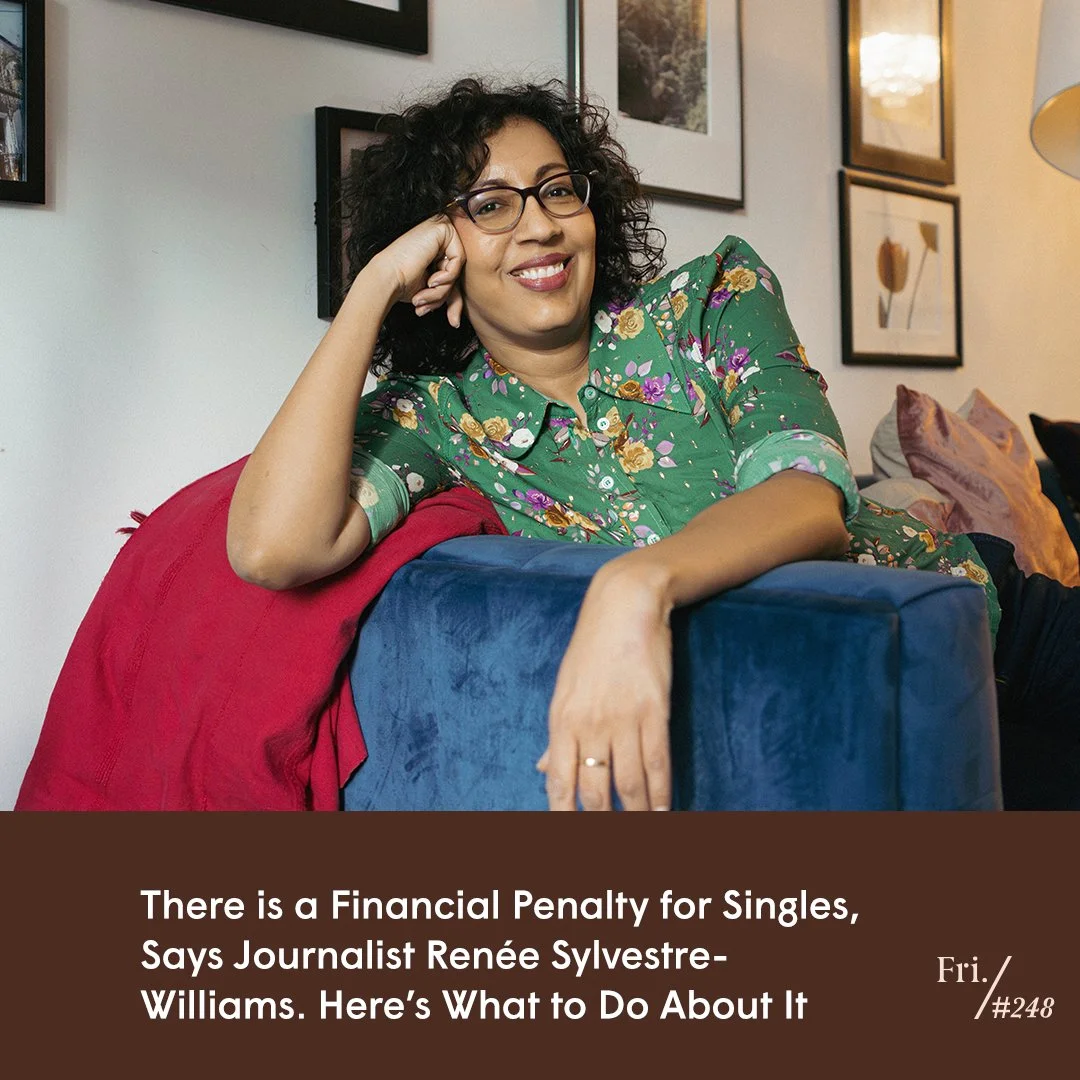
Image: Jalani Morgan
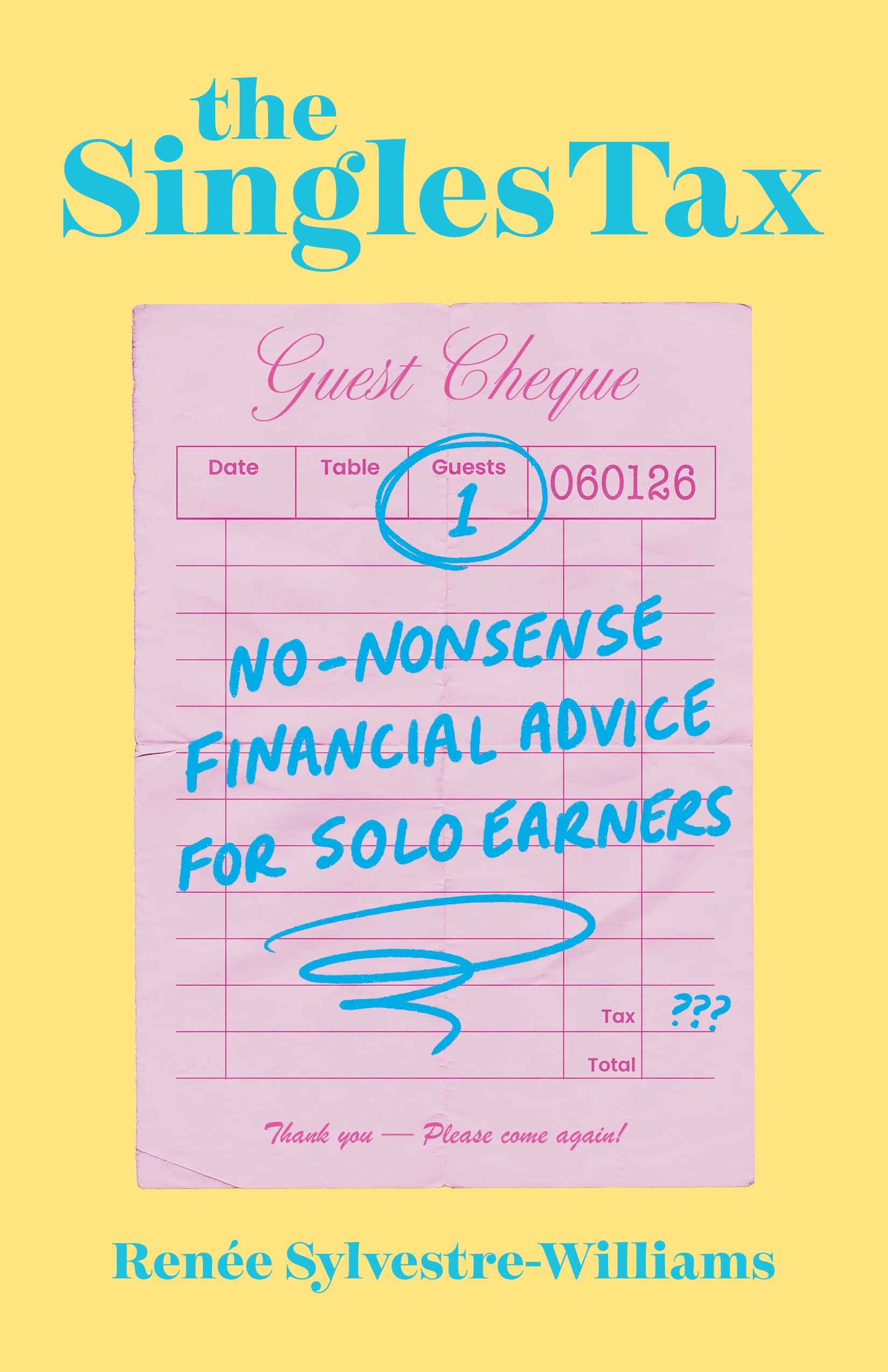
For about six years, financial journalist Renée Sylvestre-Williams has been writing about ‘solo earners’—that is, single people who live alone and/or manage their finances by themselves—in her super smart newsletter, The Budgette. Part of her content is practical, including how to maximize your RRSP contributions without the benefit of spousal income splitting, the best investment strategies for singles and how much you really need in your emergency fund, plus expert advice from financial advisors, insurance pros and real estate experts, among others. But I especially appreciate the way she thinks about money, because it takes into account the social mores and systems that put some singles at a disadvantage. That’s why I’m especially excited for her new book, The Singles Tax, which is out this week. In classic Budgette fashion, the book doesn’t just tell readers what they should be doing to improve their financial futures (though there is lots of that, too). She also explains why financial systems, government policies and the usual financial advice aren’t always built for single people, why that matters and how we can work around these disparities. Here, we chat about what the singles tax really means, whether the way we talk about money is changing and the financial benefits of not being coupled up.
I have so much beef with personal finance advice. For a long time, it was so dismissive and didn’t really reflect the reality of people’s lived experiences—like the idea that millennials were spending all their money on fancy brunches with avocado toast instead of saving for a down payment. But as you have pointed out many times in your newsletter, even when it does take into account stagnating wages or rising housing costs, this type of advice is still often geared toward couples and families. I know that’s partially what you’re talking about when you say “singles tax,” but can you actually define what that term means?
The singles tax refers to the societal and governmental policies that were or are in place that make single people feel financially disadvantaged. So, there are tax advantages to being a couple. You can split your income so you pay less in taxes—single people don’t have that. The other thing with being single is you don’t benefit from economies of scale. I carry the cost of my condo myself. Now, obviously, the easy answer is, why don’t you get a roommate? Well, what if I don’t want a roommate?
There’s definitely an assumption that single people shouldn’t expect to have the same lifestyIe as partnered people. You recently gave an example of this in a newsletter about how apartments and condos intended for single people are designed to be smaller; I was really struck by the idea that if you’re single, you should just accept that your home won’t be able to accommodate your community. Like, you won’t get the chance to take up space in the same way as a couple, and that’s just the way it is.
That came about because a friend of mine sold her place to move closer to downtown. I went with her to look at apartments in her budget, and some of the bathrooms were really small, some of the bedrooms didn’t have closets. Now, you do not find significant space in downtown Toronto, but if you want to be here because your life is here, your work is here, your community is here, your doctor’s here, you want to walk everywhere, you want to take transit, you know, all those kinds of things, you have to pay, I would say, $600,000 to get a space that allows you to breathe a little. And we live in a cold country! If you’re looking at it on more of a macro scale, for half the year, you can’t really go outside and use public parks because you’re freezing, so your home becomes your default entertaining space if you want to have people over. But not everybody makes six figures a year. (Actually, the median after-tax household income is $74,200.)
Entertaining is such an interesting metric, too, because people perceive it as a frivolous luxury. Like, “Oh, you want to have a dinner party.” But what we’re actually talking about is having connections to community.
Right. You’ve probably read the same studies that I have about loneliness. Yes, there’s a male loneliness epidemic, but there’s also a general loneliness epidemic. And actually, one of the metrics of physical and mental health is how strong your community is and how many friends you have.
It’s so fascinating to me that as a society, we dismiss so many of the things that make us human. People should be able to afford leisure, and good, healthy food that is not only nourishing, but also pleasurable. But there’s definitely this idea that we can, and should, cut those things out because they’re not necessities, as if being a human is just about bare-bones necessities.
This is changing—like that whole Vogue piece about having a boyfriend being embarrassing—but there is also still an underlying sense that being single is a temporary state. But the thing is, it’s not. It’s a state that you can find yourself in at any point in time, and it could be permanent. You could be somebody who has absolutely no interest in relationships, you could be somebody who’s recently divorced and doesn’t want to find a new partner, you could be mourning the death of your partner.
And even if they’re in a relationship, some people are thinking about what that looks like, and it may not be integrating their finances in the ‘traditional’ way.
Exactly. Going back to what we had talked about earlier, there are tax advantages to income splitting, spousal RRSPs, that kind of thing. But, I also don’t want to make it sound like it’s entirely negative to be single. I’ve often written about this in my newsletter: being single is an opportunity for you to understand who you are financially and what values are important to you, and to figure out the goals you want to work toward. When you are single, you might have to compromise with circumstances and jobs and location and all of those things, but you’re not compromising with another person, so there are absolutely advantages to being single in that way.
The problem with personal finance is that too many people put a lot more weight on the personal than the finance. As Jackie Porter has said, knowing where every dollar goes at least gives you power over your money. But you are not going to personal finance your way out of a housing crisis! I just wrote about this for The Walrus—economists are saying the economy is doing well, but when you talk to Canadians, they’re like, “I don’t know about that.” Because you can get those reports that unemployment has dropped and that’s great, but it’s taking longer to find a job. I believe wages are starting to be suppressed due to AI. And when you are a single person, your costs keep going up, so at the end of the year, you’ve made less money and you don’t have a second income to fall back on. And again, I feel like one of the traditional responses to this is, well pick up a side hustle, or find another job, or freelance, but the answer should not be work more hours.
All of which feels especially relevant when you consider the other disparities the singles tax can exacerbate, especially when it comes to gender and race.
Yes, because you also have to take into consideration things like the wage gap and how that affects women, and especially racialized women, and LGBTQIA people and racialized people within that community. And then, of course, you have to take into consideration that a lot of caregiving in Canada is free, and usually on the backs of women. If you are a single woman and you have to take time out to care for your parents, there are higher risks to missing out on time in the workforce—you lose out on that time where you can build your investments and retirement income.
Do you think the way we talk about money is changing? Because to be fair, I haven’t actually seen a ‘don’t eat avocado toast’ article in years.
Overall, I think it’s slowly changing. What I’ve been seeing—and this is my algorithm feeding it to me, so take this with a grain of salt—is a massive reduction in shame around money. I think people are being very transparent about how they make their money and how much things cost and what they’re spending on. There’s still that kind of daytime talk show element of it where there is a little bit of that shame and blame. There’s a guy on YouTube and he does this show where people who have absolutely dire financial circumstances come on the show, and he yells at them for an hour, and it’s entertainment.
Investment and money advice has also been democratized, for good and for bad. That used to come from on high, and now we have FinTok. But there’s a lot of financial misinformation out there.
But there are also things that haven’t changed. There was an article on CBC recently about how young people are just ‘vibe investing,’ which was really interesting because to me, it’s no different from investment advice that I remember reading years ago, which was, look around, see what people are using and invest in those companies. It’s the exact same thing. If you read the article, you’ll see one person says they invest in Walmart. Well, yeah, that makes sense. People have invested in Walmart since Walmart became a thing. It’s like people investing in Disney because they see how many of their friends and family love Disney movies. It’s just a new marketing spin on an old concept.
Okay, so I have a theory to run by you: I think we need to talk about the financial viability of singleness for the same reason we need to talk about affordability for artists or healthcare workers or other groups of people. You know how there’s a direct line between housing affordability and what kind of city we live in? Not just in terms of who can afford to live here, but also the actual energy of the city and even the quality of healthcare? If more of us are opting to be single, or to your point, dipping in and out of singleness, then there’s a massive portion of people that could be driving culture, making important discoveries, or just doing interesting things, but we don’t actually account for them in our policies.
You are 100% correct. There’s a significant number of single Canadians—4.4 million people lived alone in 2021, which is 30% of all households. Having affordable housing and lifestyles in a city contributes to how vibrant a city is. But what a lot of people are forgetting is that a rising tide lifts all boats, right? If a single person can afford to live in a city, a family can afford to live in a city, and that family can also be creative and take their kids out to the museums and the free art shows and ice skating at the public rink. Making a city affordable for one group can lead to affordability for everybody. This isn’t just a ‘for you, not for you’ kind of thing.
What was the most surprising thing that you came across while writing the book?
One of the things that I found when I was doing my research was an article in The Walrus by Cheryll Case titled “How Neighbourhoods Are Built to Keep Out Single Women,” which was about how there used to be bylaws that prevented non-related people from living together. She goes through this whole thing about how newspapers used to warn that female independence was a threat to family values. She cites a case of four single women who shared a basement apartment in North York, who were told they had to move because they were violating the town’s “family” zoning bylaw. This was in 1971. That one surprised me the most.
What financial advice would you give to the single people who are reading this?
My first thing is, understand where you are financially, and what that means for you in the future. You may not like the answer, but quite frankly, the earlier you do it, the more runway you have to adjust. The second thing goes back to basic personal finance advice, which is, ensure that you have some kind of safety net. That should be an emergency fund for unexpected expenses, but if you do a lot of freelancing or contract work, I suggest having some kind of insurance policy that covers you in case you get sick or become disabled. And I think the third piece of advice that isn’t so much financial as it is life advice, which is to live your life as you are right now. Work on your friendships, because that’s a muscle and you have to do the give and take.
I’m glad that you included a piece of advice that’s not just about saving or budgeting, because I think it’s important to remember that money is about money, but it’s also about so many other things.
Unfortunately, we live in the society that we live in, so it’s a little hard to separate money and lifestyle from each other. So, we’re all just told, make more money, hustle and grind and all of that stuff. And, yes, I write in the space, and I have written articles about investing and saving. I wrote a whole book about it! But I think fundamentally, you can’t divorce lifestyle and community from money.
The Singles Tax is on sale now.
Thank you for reading this week’s newsletter! Still looking for intersectional pop culture analysis? Here are a few ways to get more Friday:
💫 Upgrade to a paid subscription to support independent, progressive lifestyle media, and to access member-only perks, including And Did You Hear About, a weekly list of Stacy’s best recommendations for what to read, watch, listen to and otherwise enjoy from around the web. (Note: paid subscribers can manage, update and cancel their subscriptions through Stripe.)
💫 Follow Friday on social media. We’re on Instagram, YouTube and (occasionally) TikTok.
💫 If you’d like to make a one-time donation toward the cost of creating Friday Things, you can donate through Ko-Fi.