
A (Slightly Selfish) Book Recommendation
By Stacy Lee Kong

Image: Supplied
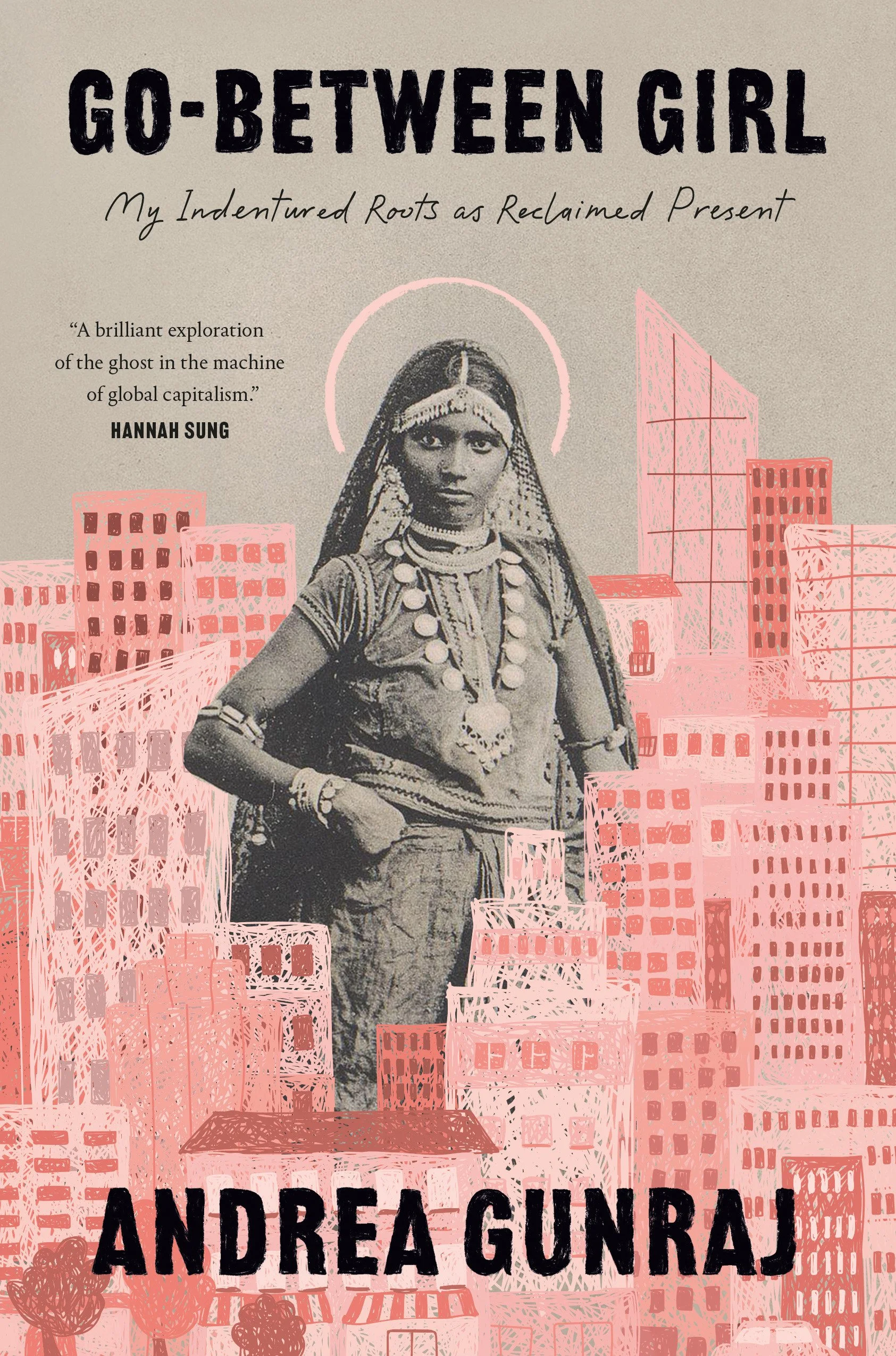
If you’re not Caribbean, you may not have heard of indentured servitude. This was a system of labour where workers signed contracts, called ‘indentures,’ to work for free for a set period of time, usually five years, to repay a loan or pay off a debt. While people did choose to enter into indentureship—nominally, at least—this system was definitely exploitative and abusive, especially for women. And, it has had wide-reaching impacts on the descendants of these indentured servants, especially in Indian diasporas. Because while this system was in use all over the world (the myth that Irish people were enslaved actually stems from a real history of indentureship, for example), it was hugely consequential in South Asia; under the Indian indenture system, the British transported 1.6 million people to their various colonies, especially in the Caribbean and Latin America. This is something I know about because it’s how some of my ancestors got to Trinidad, but I’ve rarely seen it explored or explained outside of family conversations. Until now, that is. Author Andrea Gunraj just published a really beautiful book, Go-Between Girl, that tracks the fall-out from indentureship throughout history and around the world—and in really personal anecdotes from her own family. I’m calling this a slightly selfish recommendation because I got to contribute in a really small way (I was one of the readers for the audiobook!), but even if I had nothing to do with this project, I’d want everyone to read it because Gunraj doesn’t just explain how indentured servitude worked and how it changed the trajectory of so many people’s lives. She also argues very convincingly that tendrils of indentureship linger in modern migration, labour practices and economic systems—and us. So obviously I had to ask her questions about the myth of belonging, the important differences between slavery and indentureship and the most surprising legacy of this history—which, spoiler alert, was about style.
When I was telling people that I was going to record chapters of Go-Between Girl, I really noticed how often I had to explain what indentureship even was. I must have known that before, because I’ve talked about how my ancestors got to Trinidad, but it was really striking in this moment to see how few people had even heard of it. Reading the book, it’s clear you’ve had similar experiences. I’m curious how that shaped the way you understood your family history, yourself—even your space in the world?
I heard the term indentureship when I was a kid, in whisperings [from my] family, but did I get any of that information at school, did anybody talk about that form of labour? No. When I started looking into it as a teen, I started to see that, oh, it’s a form of labour that has been around for a long time. So, what does that mean when that’s how your ancestors migrated around the world? What does that mean for you now? What does that mean for your status? Why do you feel like you don’t quite belong anywhere?
But putting those lines together is a really impossible project as a kid. Later on, in my university years, I took a Caribbean and Latin American studies course and started to draw the threads between what it means to be an indentured, racialized person, and what it meant for people who were then seen as ‘coolies,’ outsiders but insiders, moving around, used for work, maybe chosen, maybe not chosen… I’d say that it’s only been the last five to 10 years that I’ve seen people connecting indentureship with other things about the history of the Caribbean and Latin America, other labour movements and other forced and coerced labour, like transatlantic slavery, which is the primary form of coerced labour in the Caribbean
I really felt that that was important to explore in this book, not only to unveil a hidden history, but also [to understand] what it means to our work today, because I think the forms of work that we all do today have echoes of that indentureship in it, whether or not we realize it.
Was there a moment when it felt like that understanding really coalesced?
I’d say the moment that was a big light bulb was when I read Coolie Woman by Gaiutra Bahadur. She pulled together this idea of what the coolie woman experience in the Caribbean means to people today and drew a line to gender-based violence, particularly in the Guyana context. My family’s Guyanese and seeing that, I was like, ‘Damn, I could draw those lines, too. And I can probably think about other lines that are undrawn, or just dotted lines right now.’
What was surprising to me was finding out that a lot of those lines are still undrawn, even though I made every attempt to do so… and [realizing] they don’t need to be definitively drawn. I felt that was the revelation of writing the book—not really that I was able to put a finger on this history, but that I put a finger on what it means to be a liminal person now.
The idea of being a liminal person really resonated with me. I think about belonging all the time, and as you mentioned earlier, you also used to wonder why you don’t feel like you belong. Do you have a stronger sense of your own belonging now, having drawn some of those lines?
It’s a good question. I feel like what I’ve learned is that belonging is a bit of a myth. The fact that I don’t feel that I belong is actually part and parcel of a history that I have no control over. But, if we embrace it, stretch it and put our meaning in that go-betweenness and non-belongingness, it becomes a strange form of belonging.
I was so surprised to read the section about how the indentured population around the world pretty closely mirrored the breakdown of Indian society by caste because I always assumed indentureship was restricted to low-caste people. Was that something you knew before you started writing?
That shocked me. When I was a kid and very presumptuous, I thought it had to be all low-caste, outcast people. I thought only the people with nothing to lose would even put themselves through that process, only to find out that people were so in need of work, of food, of escape, of safety, that they did, at all caste levels, go into indenture contracts in India. To me, that brought to light the difficulties of British rule in India, including the famine, which was so widespread that so many people got displaced within the borders of India, let alone outside the borders of India.
That made me think about how choices are more complicated than just ‘I choose’ or ‘I don’t choose.’ When you don’t have many choices, what’s the quality of your choices? And it got me thinking, of course, about the choices that immigrant parents make. I’m not the immigrant who moved from Guyana to Canada, my parents were. So, it made me think about the choices that everybody makes to find a better life. Or maybe it’s not just about a better life, but also an aspiration to make a better life for everybody around you, because you care about other people and are a person who sees yourself as contributing to the world. Why don’t we talk about that a little bit more? And then maybe we can look right back to the indentured and say, ‘Hmm, what about them? Did they make that choice? Was it all pressure? Was it all famine and escape, or could it have been this positive push?’
That’s really fascinating because it complicates the question of shame, I think. When I thought about how, in some families, there can be shame around indentureship, I figured that was about being low-caste and unable to transcend class barriers in our ancestral homelands. But maybe that’s be too simple an explanation.
That’s one of the questions that I have for my parents’ generation, which of course then translates to their parents’ generation, and their parents, and beyond—because the indenture period was quite broad. It was a very active 100 years between 1830 and 1930, at least for the Indian indentured that went to the Atlantic colonies.
In the case of my family, I have to think that some of that shame had to do with self-making in that time and place. My great-great-grandparents, for instance, had no desire or hope or pathway back to India; that wouldn’t have been their situation. So I would imagine that if there was any shame, if there was any hesitancy to even speak about it, it’s because they wanted to root themselves where they were. They wanted to not be seen as forever foreigners.
I really appreciated that you wrote about being a kid and believing that indentured servitude was a replacement for slavery post-abolition, which I also believed, and how learning about indentureship helped you understand that was not the case. Why was it important for you to make that distinction?
I don’t ever blame myself, or others, for thinking that there was a replacement element to this. There was a replacement element in some ways; the British [were certainly] saying that it was a way out of slavery, like, ‘We can keep things going, we can keep the economy running, we don’t have to lose all the years of work that we put into our colonies, we can get a new group of people to do it, and it’s just fine, because it’s all above board and we’re not breaking law anymore.’
But when you look at the long, long history of this form of labour, indentureship was there for years before transatlantic slavery, it actually happened along with transatlantic slavery and it [continued after]. Before enslavement, indentureship was done by Europeans: criminalized people, people who were poor, people who were looking for adventure. Then transatlantic slavery became more popular and more profitable, and after that, indentureship looked racialized. Because of the lessons they learned from slavery, there was a hardening of whiteness, a hardening of racism, and the people who did grunt labour, who built the colonies and communities, who upheld the plantocracy and systems of making profit, had to be racialized. These forms of labour speak to each other, happen at the same time, one goes over the other, one goes down, the other one goes up—it makes for a really, really complicated history. What’s not complicated is the racism that underlies it all.
I really loved Sadiya Ansari’s review of the book, where she described it as being about culture and love and food and modern labour (which we still have to talk about!). Of all of those wide-ranging legacies of indentureship, were there any that surprised you?
I think the thing that surprised me most was aesthetics. I didn’t expect that side of it, and I didn’t think there was anything particularly impacted about my personal taste. But when I think about what’s tacky, what’s not tacky, what’s acceptable, what’s not acceptable, what I want to be known for, what I’m afraid will be a cast towards me, the opposite of what I see as an indentured or an uncouth style is going to be white modern aesthetics. I was really surprised by that. And then I just thought, Oh my gosh, this stuff is so broad and it touches every single part of who we think we are, everything that we struggle with. Even the way that we try to self-make and look good and feel good and be cool is touched by this. What is not touched by this?
Okay, last Q: What is it about this form of labour that is so timely and relevant to our current understanding of migration and work?
I always look to the way that what we see as regular, normal, ‘good’ work shifts every 10 years, which is directly tied to the economy. Now, the job security that we took for granted, no longer there. The idea that you are known for your labour, so if you can’t work, if you’re sick, if you are a caregiver or you’ve got other responsibilities that are unpaid, if you’re somebody who needs different terms of work, then you no longer have a place, or your place is very devalued. We’re seeing that in so many different ways. This growing divide between the small group of people who have so many resources, and the rest of us struggling to be able to make ends meet, even in rich countries. I think that’s why it feels relevant. It’s because we’re seeing that we’re trapped in things that are way bigger than us. These are not our own choices, and choice is a bit of an illusion. I think if we can look at this particular kind of labour, this liminal labour where you never quite belong, where you’re never seen but you have had such an impact in our modern economy, and embrace that a little bit more, take on the plight and the go-betweenness, it could serve everybody very well right now. Because we are go-between people, whether or not we want to be, and whether or not we understand ourselves as go-between people.
This interview has been edited and condensed.
Thank you for reading this week’s newsletter! Still looking for intersectional pop culture analysis? Here are a few ways to get more Friday:
💫 Upgrade to a paid subscription to support independent, progressive lifestyle media, and to access member-only perks, including And Did You Hear About, a weekly list of Stacy’s best recommendations for what to read, watch, listen to and otherwise enjoy from around the web. (Note: paid subscribers can manage, update and cancel their subscriptions through Stripe.)
💫 Follow Friday on social media. We’re on Instagram, YouTube and (occasionally) TikTok.
💫 If you’d like to make a one-time donation toward the cost of creating Friday Things, you can donate through Ko-Fi.