
I Interviewed KestheBand. That’s It. That’s the Tweet
By Stacy Lee Kong
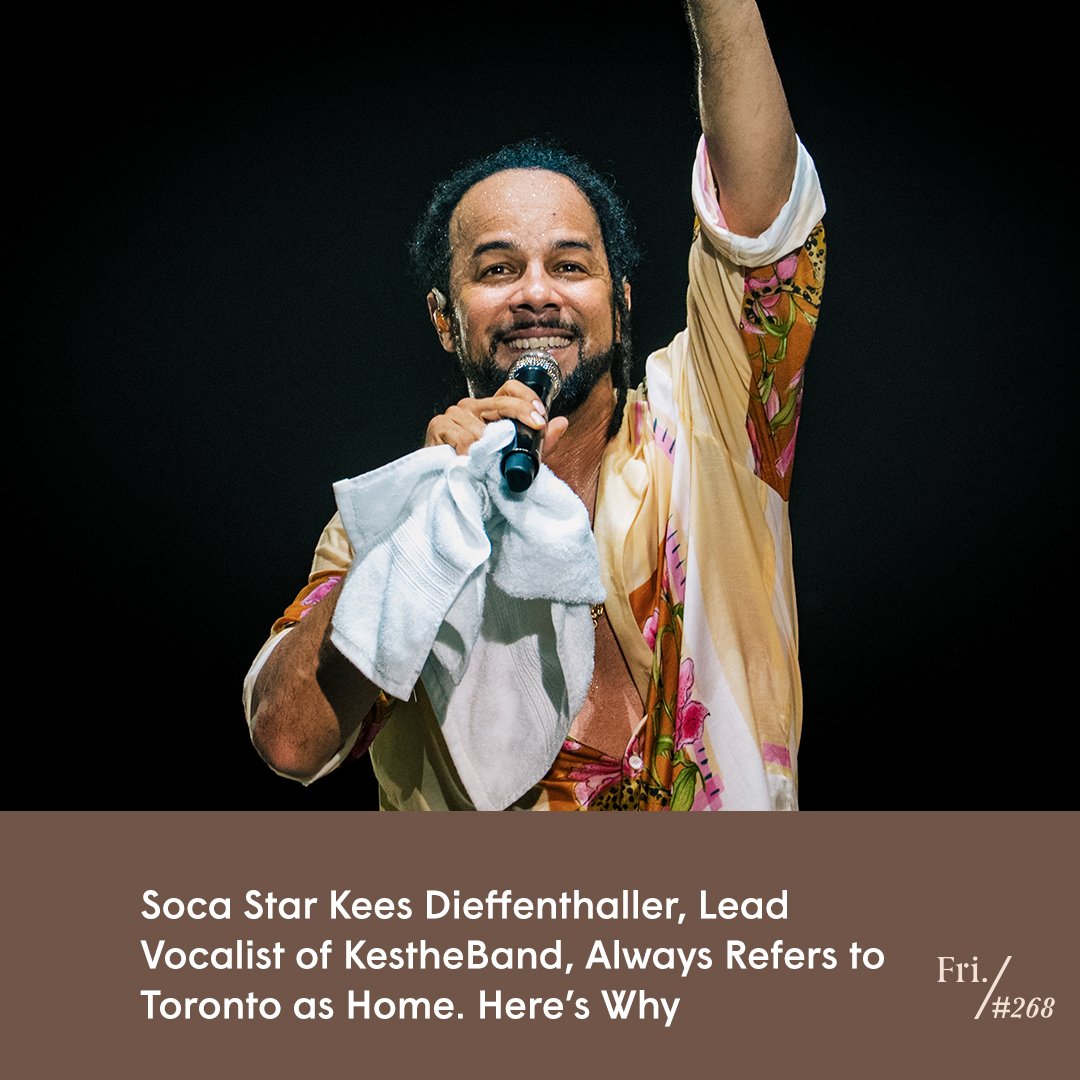
Image: Jono Hirst for KestheBand
About a month ago, I was at RBC Amphitheatre (fka Budweiser Stage, forever Molson Amphitheatre, to me at least) with my niece, Haley, and 16,000 other Caribbean people, singing at the top of my lungs and dancing non-stop to KestheBand, one of the biggest soca acts in the world right now. I love soca and Kes, so I was going to have a good time regardless, but what was most striking about the evening wasn’t the hits they played, the guests they brought out or how many steps I managed to accumulate over the course of a couple of hours (though: 20,000). It was how Caribbean the night was.
This is not surprising. Soca is a genre on the rise, and the band is having a very big year; even if you’re not a soca fan, Kes—made up of frontman Kees Dieffenthaller, his brother Jon and bandmates Riad Boochoon, Dean James, Mario Callender, Geiron Mang and Robert Persaud—may have crossed your feeds recently, whether because of their sold-out shows in Toronto, New York City, L.A. and other cities, their internet-breaking NPR Tiny Desk performance or Kees’ recent nature TikToks. But the genre’s popularity is absolutely still concentrated among Caribbean people, so of course that was the vast majority of the audience. The notable thing was actually how good it felt to occupy the same space and time with other Caribbean people, to recognize the same references and inside jokes and to feel a shared sense of history and culture. Maybe that’s also obvious, tbh! But recently I’ve been thinking about the limits of representation, specifically around what it actually accomplishes politically, so I honestly appreciated the universe’s reminder not to get too caught up in the theoretical.
Of course, I am still me, so it wasn’t just scream-singing the lyrics to “Savannah Grass.” I also wondered about the role Toronto plays in KestheBand’s musical journey—and other artists’ journeys, for that matter. (As an elder millennial, I obviously thought way back to 2002, when Sean Paul famously shot the video for “Get Busy/Like Glue” at a bashment party in Vaughn.) So, I asked. Read on my chat with Kees about the band’s recent successes, how they’re thinking about growth after 20 years in the business and how he feels about our current pop cultural moment, which I’d argue is very Caribbean.
You often tell Toronto audiences that the city is your home, including at your July 4th show, which was the finale of the Roots, Rock, Soca tour. Why do you feel that way—is it just because of the support you have here, or are there other connections?
Toronto has earned that title in my heart over many years. It's not something I say just because the crowd is loud, although the love here is incredible. This city has been part of our journey from very early on. We've been coming here for years, building relationships, making friends who became family, making music [and] collaborating with artists, creatives, promoters and fans who believed in us long before people were talking about us globally.
There's also something about Toronto that reminds me of Trinidad. The diversity, the food, the music, the energy—you can feel the Caribbean heartbeat here. Every time we land, it feels familiar and it’s a feeling I really appreciate. Ending the Roots, Rock, Soca Tour felt really fitting. So when I say Toronto is home, it's because it genuinely feels like an extension of home [and] of who we are.
You’ve been coming to Toronto for years in the summertime, but more recently, you started doing a December show—KesMas—which has really become a tentpole in Toronto's Caribbean cultural scene. I’m interested to hear about the thinking behind adding it to your schedule.
For years we'd come to Toronto, do one show during Carnival season and leave wanting more. The connection with the audience was always there and we wanted to build something deeper. KesMas came from the band asking ourselves, "What if we created an experience instead of just another fete?
We wanted to bottle that feeling of Carnival—the joy, the freedom, the community—and build a 360-degree experience around it. Not just for Trinis, but for everyone who wants to experience Caribbean culture in an authentic way. Seeing it grow over the last few years has been really beautiful because our fans have really made it their own.
I think the thing I'm circling around with these questions is the role Toronto has played in the development of KestheBand as an international act. I'd love to hear your perspective on why this is an important market, and even how you came to understand its importance. Put another way: is Toronto important because there's a huge Caribbean population, so it makes sense to perform here, or is there other infrastructure here that has also supported your growth?
The Caribbean community is definitely the foundation. They've supported us from the beginning and created a home away from home for us. But Toronto is much more than that. It's one of the most multicultural cities in the world, and that creates opportunities for music to travel across communities in a really natural way. So much has happened here that has contributed to our growth. I think the one thing I always hold on to is the fact that Toronto has helped us understand that we didn't have to limit ourselves to one audience, nor did we have to change who we are. We could stay true to ourselves while introducing soca and Caribbean blends of music to people who may never have experienced it before. That's been a huge and really rewarding part of our international journey.
Tell us the inspiration behind the Roots, Rock, Soca Tour theme. Why did you choose that phrase?
The Roots, Rock, Soca Tour is really about honoring where we come from while embracing where we're going. ‘Roots’ speaks to our foundation—our Caribbean identity, our Trinidadian culture, the music, the people, the energy and the experiences that shaped us. ‘Rock’ represents strength, resilience and evolution—and where we started musically as a rock band. It's about pushing boundaries, taking creative risks and standing confidently in who we are. And ‘Soca’ is the heartbeat of it all. It's the vehicle that connects everything we do.
The tour was created to show that soca isn't confined to one season or one stage. Roots, Rock, Soca defines our overall sound, as we've combined all our influences over the years to create our own sound of soca. At the heart of our approach is innovation and a deep love for our culture, our history and our people. We truly believe that soca music deserves to be experienced year-round and around the world. Every performance is an invitation for people—whether they're from the Caribbean or discovering our culture for the first time—to connect through joy, rhythm, love and community.
That's what this tour represents for us: taking our roots with us everywhere we go while continuing to grow.
It feels like you and the band are in the middle of a really interesting period of growth: along with the success of the Roots, Rock, Soca Tour, this year you did a Tiny Desk Concert and played Lincoln Centre, both of which feel very special. How did those opportunities come up, and why did they make sense to pursue?
It still blows my mind to think back on the first half of 2026, now that you mention it. Those opportunities have been really special because they represented spaces where Caribbean music hasn't traditionally been showcased in this way. I think they came about because we've spent years consistently doing the work and building relationships while staying true to our sound. It’s been over 20 years of “cutting bush”—but I know we stand on the shoulders of giants who came before us and paved the way for these life-changing experiences.
For us, it wasn't about checking boxes or saying we'd performed at certain venues. It was about presenting our music in environments where people could experience it differently—really hear the songwriting, the musicianship and the emotional connection behind it. Those moments help expand the conversation around what soca music can be and where it belongs. We belong on every stage, in every room and in every community.
You've been performing for 20 years, you're already one of the most important and notable contemporary soca artists, so what is the personal and professional appeal of expanding in this way? You're also clearly investing in this growth by working with a new publicity team in Tenille Clarke and Yvette Noel-Schure, and in other ways, I'm sure. So, why do all of that now?
I think every artist reaches a point where they ask themselves what the next chapter looks like. For me, after 20 years, I still feel inspired and curious. I don't feel like we've reached the finish line—I feel like we've built a strong foundation.
Growth requires intention, and it also requires the right people around you. And we are so lucky to work with this entire KestheBand team—our publicists, managers, technical staff, stage designers, lighting, sound, social media, tour manager, photography, videography, logistics, administrative. It’s about surrounding ourselves with individuals who believe in the vision and understand how to help us reach new audiences while protecting what makes us authentic. If we're going to invest in growth, now feels like the right time because the music is ready, the band is ready, and the opportunities are there.
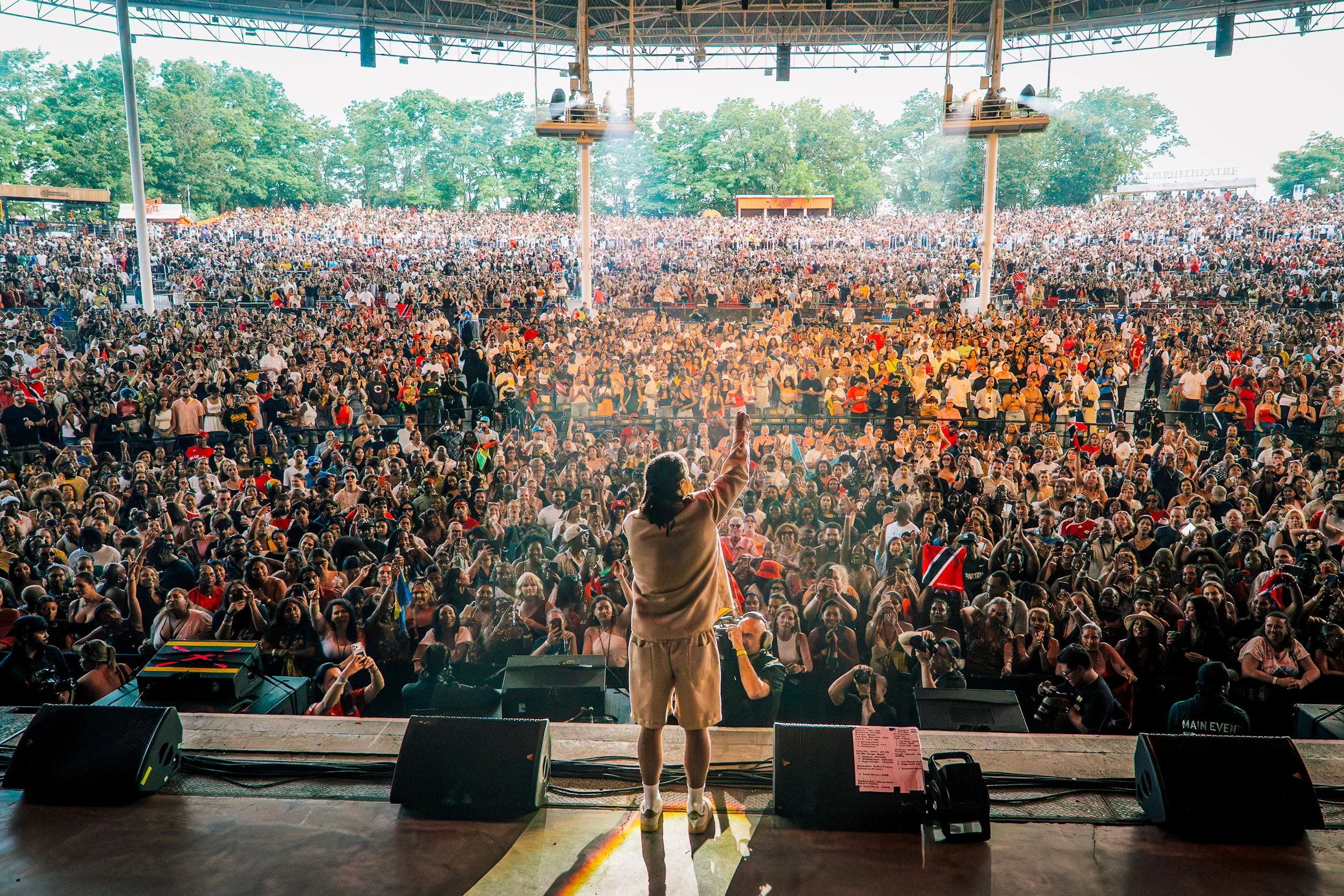
Image: Jono Hirst for KestheBand
Speaking of opportunities, if we zoom out to industry and wider culture, is there also something to say about the moment that we're in? To me it feels like there has been a real mainstreaming of Caribbean culture of the past five or so years. I'm thinking of everything from Levi's shooting a campaign in Trinidad—and explicitly promoting it as being there, as opposed to a generic Caribbean setting—to Bad Bunny's Super Bowl performance. How does that wider cultural shift play into your strategies for the band's growth?
I think it's an exciting moment in time to witness because people are becoming more interested in authentic Caribbean stories and experiences. For a long time, our culture influenced the world without always being acknowledged. Now we're seeing more recognition and more curiosity about where those influences come from.
That doesn't change who we are or how we create. We've always made music from a genuine place, from a heart full of love. What has changed is that there are more opportunities to introduce that authenticity to global audiences. Rather than changing ourselves to fit the moment, we're allowing the moment to meet us where we've always been.
Relatedly, how does it feel to see Caribbean-ness everywhere? I find it really affirming because I was born in Trinidad but grew up in Canada, so I wasn't surrounded by Caribbean culture the way I would be if I had grown up at home. But I'm curious what your perspective is, not only as someone who spent their formative years in Trinidad, but also someone who is professionally invested in the Caribbean culture sector, and has been doing the work to take that culture to other places.
It's a beautiful thing to witness. Growing up in Trinidad, our culture was simply life. As I've travelled more, I've gained a greater appreciation for just how unique and influential it is.
Seeing Caribbean culture embraced around the world is something I celebrate, but I also think it's important that we continue telling our own stories. It’s the reason why our IzWe Festival was created for Trinidad Carnival. Authenticity matters. I hope that when people discover Caribbean music or culture through what we do, it encourages them to learn more about the people, the history and the creativity behind our culture. That's something I take a lot of pride in because I really believe that there is something for everyone.
I think there's an argument to be made that your entire career has been about charting your own path, but that feels especially true of your recent moves. So: what does it mean to be a soca star in 2026? And is it different from what you imagined at the beginning of your career?
To be honest, I don't know if when my brothers and I first started off in music that we ever set out to follow a particular model. Every generation has its own opportunities and its own challenges, and I think our responsibility has been to remain authentic while continuing to push the music forward. The Roots, Rock, Soca Tour was activated with that purpose in mind—sharing the spirit, sound, and soul of the Caribbean with audiences far beyond our shores, bridging cultures through music and showing the world that soca belongs on stages everywhere.
Being a soca artist in 2026 means representing the culture on a global stage, and in many ways that mission has not changed. It means being an ambassador, a collaborator and a storyteller. I believe for KestheBand, it’s about showing that Caribbean music can exist everywhere, from Carnival stages to concert halls, festivals and platforms around the world. And it’s about bringing that spirit of collaboration wherever we go.
When I started, I probably couldn't have imagined the journey looking like this. But one thing hasn't changed: we will continue to dream bigger. I've always believed that if you stay true to your roots and continue growing as an artist, the music will find the people it's meant to reach. That's still what drives me and the band today, and it will continue to drive us in the days, months and years to come.
What's next for you, in Toronto and in general? I'd love to hear anything you can share about your plans for the band and how you intend to continue growing.
We’re focused on continuing to tour internationally. I’m looking forward to creating new music and working towards a new album, exploring new collaborations in and outside of the studio and bringing Caribbean culture to even more stages around the world. KestheBand is always looking for ways to evolve creatively while staying true to who we are. I think the next chapter is really about expanding the reach of soca music without losing the heart of it.
Of course, Toronto will always be part of our journey, so we'll definitely continue to find opportunities to connect with the community. This year, it was bringing the Roots, Rock, Soca Tour to a close here. And I’m excited to see what the future holds.
This interview has been edited and condensed.
Thank you for reading this week’s newsletter! Still looking for intersectional pop culture analysis? Here are a few ways to get more Friday:
💫 Upgrade to a paid subscription to support independent, progressive lifestyle media, and to access member-only perks, including And Did You Hear About, a weekly list of Stacy’s best recommendations for what to read, watch, listen to and otherwise enjoy from around the web. (Note: paid subscribers can manage, update and cancel their subscriptions through Stripe.)
💫 Follow Friday on social media. We’re on Instagram, YouTube and (occasionally) TikTok.
💫 If you’d like to make a one-time donation toward the cost of creating Friday Things, you can donate through Ko-Fi.