
Q&A: Canadian Artist Bramble Lee Pryde on Her New Fine-Art Jewellery Collection
By Stacy Lee Kong
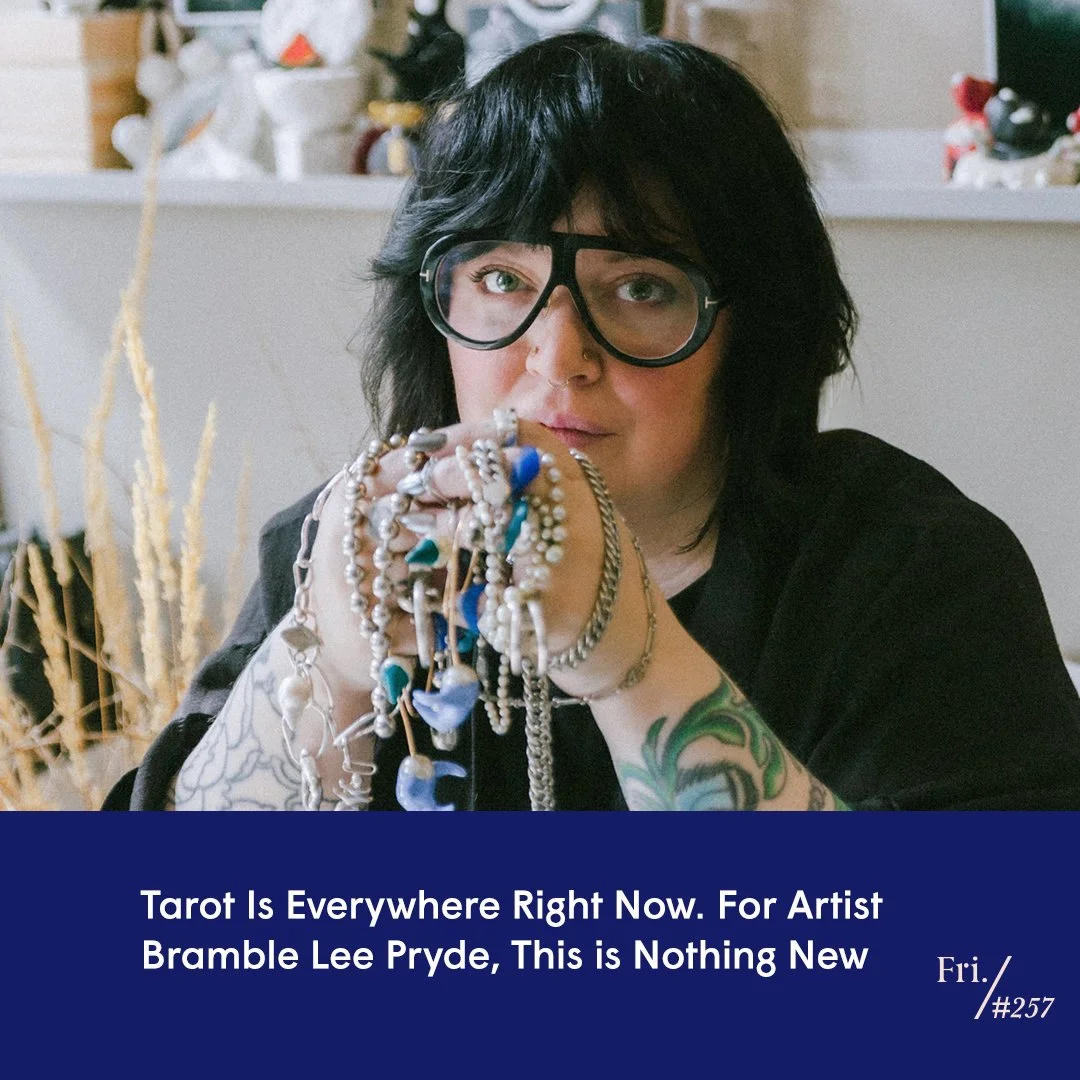
Image: Supplied
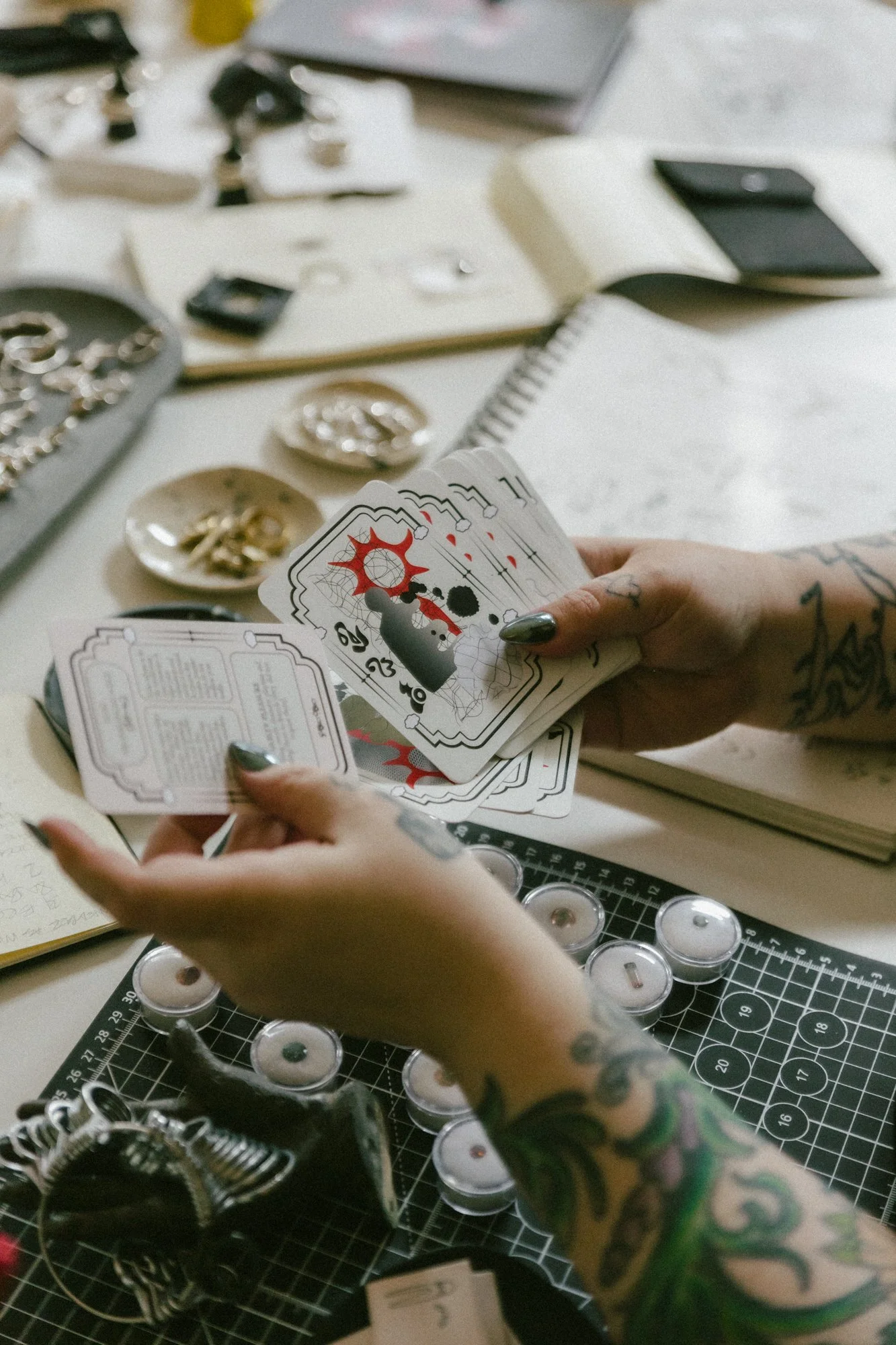
It’s a chilly afternoon in mid-February and Bramble Lee Pryde is telling me that I’m going to be okay. Well, actually, she didn’t put it quite like that. The Calgary-based artist and founder of Subject Object, a high-craft jewellery studio, is promoting her new collection, The Existential Dreadlings, by leaning on a long-running personal practice: tarot readings. This new work, a line of sculptural jewellery adorned with figures that she describes as “tiny guardians for turbulent times,” came about with the help of tarot, which Pryde uses to guide her creative process. So, she’s in the midst of pulling a year-ahead spread for me, four cards meant to give me themes to think about for each season. She’s clear that the cards can’t tell me what’s going to happen over the next 12 months, but they can help me figure out how to approach the unexpected. And… they kind of do! As a journalist who considers herself very grounded in fact, but also loves a little woo-woo, I liked hearing about how periods of inner work can prepare me for bigger transformations, and frankly, I always need the reminder that I can’t—and probably don’t actually want to—control everything. (Allegedly.) My reading was accompanied by a really fascinating chat about how Pryde uses tarot in her own work, what it feels like for a ‘90s goth girl to see this practice become so mainstream and exactly why it’s so popular right now. (Spoiler: the times, they are turbulent.)
How did you become acquainted with tarot?
Well, I am a kid of the 90s. You can't take the goth out of the girl, right? Tarot was just a really big part of that in terms of aesthetic and style, so I think the first entry point for me was that it suited how I dressed and the music I listened to. I started to dabble with it, and it just never went away. Sometimes it takes a bit of a backseat, but it's always there. It's a great tool to help you ask questions that maybe you don’t want to ask yourself, and it can open up different ways of looking at things. It has always been a really private practice for me. Then, I started to throw Solstice parties. We celebrate Yule, so we light up the house and invite people into our home to bring abundance in while outside is so sparse. At those parties, when it got closer to midnight, I would set up in a little area and start doing year-ahead spreads for some friends.
I know you also use tarot in your work, too. How did it go from a personal tool of reflection to a way to connect with your community to a step in your creative process?
I'm a practicing artist, and a lot of the symbolism and esoteric themes that are in tarot really weave into a lot of the work that I do. Whatever card I pull for myself for the year is always pinned up on my bulletin board; it's a pillar that I refer back to.
I don't necessarily love the idea of having a really strict business plan, because it's art, but tarot creates pillars and guides. I mostly use it to ask more questions, so, is this the right decision? Am I going in the right way? That kind of thing. It's not like, ‘Well, this is what the tarot card said, so I can't do anything else.’ It's more like, ‘Hey, just as a reminder, this is here. And if you're questioning what you're doing, maybe this will speak to it.’ There's a bit of visualization, but it's combined with business acumen. It's my mindfulness practice.
And I think that you can probably understand this idea, too, that when you are working on your business, it can be kind of hard to zoom out and think about how to get this to the next step. I feel like that's where tarot comes in for me. It allows me to zoom out.
So, tell me about Existential Dreadlings.
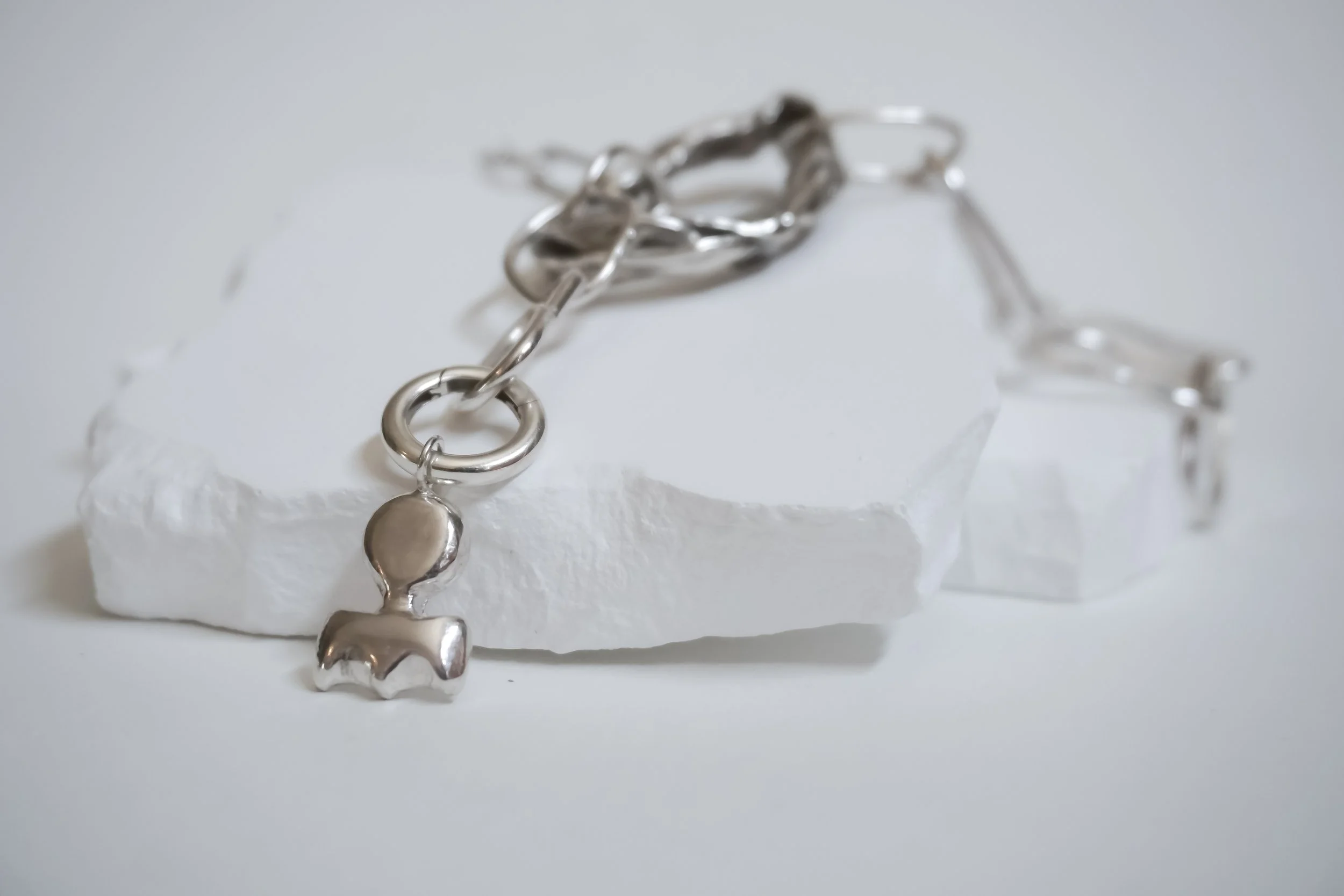
First they were sculptures. I had experienced some pretty significant loss—of my mother, my brother—in the span of several years. That was my support system. I finally had a studio and storefront, but my lease started in January 2020, and then the whole pandemic happens. I was like, ‘Can you give me a fucking break?’ It just was too much. I was wrestling with all of these things: how can I work through the anger I’m feeling because the world is a literal dumpster fire. How do I be an advocate when I can't even show up for myself? So, I used these sculptures to name the existential anxieties that I was going through. I gave them all names and I was like, “You are an exorcism. I am done with you. It’s time for me to move on to greener pastures.”
I had a gallery show that was up for about a month, and during that time, I began realizing that people were identifying with them. Like, “I'm such a Clepsydra,” or, “Vaultine owns me.” As I'm hearing these things, I’m like, ‘Oh shit. This is happening to all of us.’ I spent a year reframing the idea of these being goblin demons and turning them into guardians and stewards.
I'm curious about what it means for you to be public about using tarot in your creative process. Because as you said, it's been internal this whole time—maybe it’s a source of inspiration, or offering some guideposts, but you're not necessarily publicizing this connection. But now with the Dreadlings, it is external. How does that feel? Or does it feel like anything?
It felt vulnerable. That's the first word that kind of popped into my head. It felt quite vulnerable to create an entire universe with their back stories, knowing that the further you dive into it, the more you find out that they came from a really dark place. So, the more that I…. not commodify that, but the more [other people] can own a piece of it, the more removed I feel. Not in a bad way, just in a less vulnerable way. It’s more of a camaraderie.
Looking at tarot more generally, this isn't the first time it has been very popular. You talked about the ‘90s, but even more recently—I would say maybe eight to 10 years ago—there was a real tarot revival. But I don’t know if it felt as pervasive as it does now. Do you think tarot is mainstream in 2026 in a way that it wasn't in 2016?
Yeah, absolutely. I think that people do have a finer understanding of tarot now. It's less demonized, in a way. I do think that a lot of people have done really literal representations of it—jewelry and stuff like that. And that really flattens the idea of tarot for me. I mean, the first time I saw it, I was like, ‘Oh my god, I totally want a Sun card charm. Are you kidding me?’ But then when you see it repeatedly, it's like, is this losing meaning? But I do think that tarot ebbs and flows. Again, it was super big in the ‘90s, so seeing it pop up again wasn't that surprising. I've lived long enough to see these cycles.
I’m always so interested in the why, so I’m wondering what you think is behind our current era of tarot popularity. Do you think there's something about navigating uncertainty? To be fair, some of this a very specific to me perception (thank you to those tarot ladies that haunt me on TikTok). But in general, it feels like tarot can be a way to help you can navigate the chaos with a little bit of comfort. To me, at least, it feels like… okay, if it's prompting me to ask questions, that means that probably there's an answer.
Well, and that you're interested in actually moving forward. There's a soft nihilism that is kind of a blanket over us right now, so [people are] feeling a bit paralyzed by how to move forward. Tarot can help us explore things in a different way. I think that people are always looking for alternatives to the mainstream when the mainstream is going sideways. And here I am on the fringe being like, “Welcome!”
Bramble’s latest collection, Existential Dreadlings, is available now. You can also follow her studio, Subject Object, on Instagram.
Thank you for reading this week’s newsletter! Still looking for intersectional pop culture analysis? Here are a few ways to get more Friday:
💫 Upgrade to a paid subscription to support independent, progressive lifestyle media, and to access member-only perks, including And Did You Hear About, a weekly list of Stacy’s best recommendations for what to read, watch, listen to and otherwise enjoy from around the web. (Note: paid subscribers can manage, update and cancel their subscriptions through Stripe.)
💫 Follow Friday on social media. We’re on Instagram, YouTube and (occasionally) TikTok.
💫 If you’d like to make a one-time donation toward the cost of creating Friday Things, you can donate through Ko-Fi.