
I Don't Know How to Feel About How I Feel About Zohran Mamdani Right Now
By Stacy Lee Kong
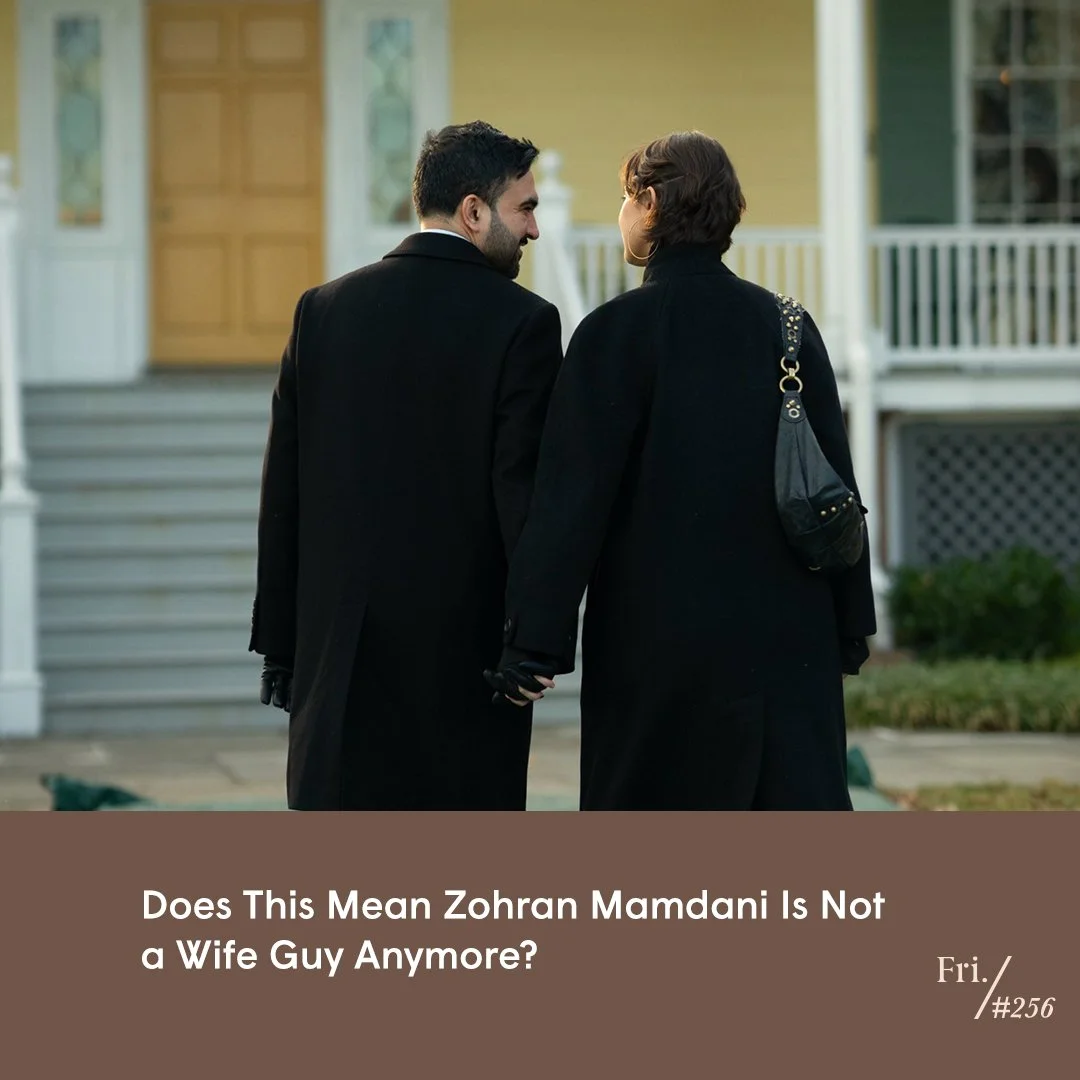
Image: x.com/NYCMayor
A note on language: As I’ve mentioned in every newsletter I’ve written about Gaza since Oct. 7, it’s super important that we take care with our language when discussing Israel and Palestine, because the way we talk about this situation has real consequences for real people. So to be clear, when I critique the Israeli government and military, I am not critiquing all Israelis, much less all Jewish people. Characterizing critique of Israel and the Israel Defense Forces (IDF) as antisemitic is inaccurate and unproductive. Furthermore, it is disingenuous and actually dangerous to conflate Zionism with Judaism, as this list of prominent Jewish writers has argued. Lastly, when I use the words colonization, genocide, apartheid, occupation and ethnic cleansing to describe Israel’s actions, that’s based on the analysis of organizations like Amnesty International, Human Rights Watch, Israeli human rights group B’Tselem, the International Federation for Human Rights, the United Nations, the Center for Constitutional Rights, Jewish Voice for Peace, the International Association of Genocide Scholars, as well as other academics who study genocide, legal experts and South Africa’s application to the International Court of Justice to bring genocide charges against Israel. It is also based on the language Israeli officials and public figures have used themselves, 500+ instances of which have already been collected by Law for Palestine.
On November 3, 2025, TikTok user @diegoeatsnyc posted a video saying, “Today is the last day that I’m freely allowed to love Zohran Mamdani, because after tomorrow when he gets elected, I will have to start holding him accountable for everything that he’s going to start doing in the city… He’s making it really hard, but I’m trying hard not to have a political crush on anyone, because it’s just not a good thing to do. I need to like, be critical and you know, make sure he’s actually doing good things for everyone in New York. But don’t get me wrong, I’m really rooting for him and I really hope he becomes one of the best mayors. And I just have to come back to this video in four years to see what happened.”
@diegoeatsnyc #zohranmamdani or maybe he will become the first politician worth having a crush on … @Zohran Mamdani ♬ original sound - Brute
It was so on-point that I didn’t just like it, I also saved it, because I knew I would also need to come back to it, and probably well before four years had passed. And wouldn’t you know, here we are just four months later.
‘Here’ specifically refers to the hellscape of X, where Mamdani supporters are reacting to a recent mayoral misstep. On the off chance that you missed it, last week, the politically savvy, very well-liked, pro-Palestine mayor of New York City did something that struck me as uncharacteristic: he acquiesced to right-leaning media outlets, including the Washington Free Beacon, New York Post and Jewish Insider, which had been publishing criticism of his wife, Rama Duwaji, over her professional connection to Palestinian writer and activist Susan Abulhawa, author of the bestselling 2010 novel Mornings in Jenin. Last year, Duwaji illustrated an essay written by Abulhawa, who has long been a Zionist target due to what Al Jazeera describes as her “incendiary” social media posts. According to the outlet, “in one article published on The Electronic Intifada website, Abulhawa described the October 7, 2023 attacks on southern Israel by Palestinian fighters as a ‘spectacular moment that shocked the world.’ On social media, Abulhawa decried what she called ‘Jewish supremacist slaughter’ in Gaza, writing, ‘these sons of satan will taste what they meted to us.’ She has condemned Israeli foreign influence, describing ‘Jewish supremacist ghouls’ and ‘vampires’ and, in one instance, calling a commentator a ‘Jewish supremacist cockroach.’”
Mayor Mamdani says his wife, Rama Duwaji, was not aware of anti-Israel posts (like calling some Israeli citizens “parasites”) from an author she illustrated an essay for.
— Josie Stratman (@JosieStratman) March 13, 2026
Mamdani calls that rhetoric “reprehensible” and says his wife booked the gig thru a 3rd party pic.twitter.com/HQqJvRYC53
Fast forward to Friday, when a journalist asked about the relationship between Duwaji and Abulhawa, and whether Mamdani thinks “[Abulhawa’s] rhetoric is acceptable.” In response, the mayor defended his wife, saying she was contracted by a third-party and never spoke to Abulhawa directly (which the author later confirmed). What’s more, he called Abulhawa’s posts “reprehensible” and her word choice “bigotry.” This... did not please anyone. His pro-Palestine supporters saw this statement as a betrayal, and Zionists took this defence as an opportunity to go even further. This week, the Free Beacon’s Jon Levine doubled down on his investigation in Duwaji’s social media, digging up Tumblr posts published when she was between the ages of 15 and 18 where she is (his words) “celebrating Palestinian terrorists” and using slurs, including the N-word.
I do want to talk about why this story has blown up the way it has, because I think it’s important to acknowledge the linguistic constraints that Western leaders impose on Palestinians who try to discuss their own oppression, and to recognize the futility of engaging with bad-faith attacks. But also, I really want us to think about political fandom right now, and why it might not be the best framework for engaging with Mamdani’s actions.
What is Mamdani actually communicating when he characterizes Abulhawa’s language as “bigotry”?
I totally acknowledge that the language Abulhawa uses is provocative and uncomfortable. In the West, we have been well educated on the ways Nazis used dehumanizing language against Jewish people during the Holocaust, and if I’m being honest, this is not the language I would use. But context matters; she is using the exact same wording Israeli officials and other Zionists have used against her people in speeches and written statements and social media posts, including referring to Palestinians as cockroaches, lice, pigs, rats, locusts, worms and snakes, among other equally dehumanizing insults. I also think it’s clear that she is using the phrase “Jewish supremacy” in the same way that we use the phrase “white supremacy.” That is, to describe the systemic disenfranchisement of people who do not belong to a specific ethnic group, and the specific individuals who subscribe to that worldview. As Al Jazeera explained, the author has “rejected that her comments represented either anti-Semitism or anti-Jewish racism, saying she was responding to a Zionist power structure and its proponents from the perspective of a Palestinian who has experienced the ravages of that system,” an idea she expanded on first in a video response to Mamdani and more recently in an interview with political consultant, commentator and podcaster Briahna Joy Gray.
I sat down with @briebriejoy to expand on the video post I made a few days ago and to answer questions regarding the specific posts I've made that offend the sensibilities of some.
— susan abulhawa | سوزان ابو الهوى (@susanabulhawa) March 19, 2026
This will be the only further commentary I'm going to make on this matter. I wasn't going to talk… https://t.co/IW69QES0GJ
Abulhawa accepts and even owns the fact that the language she uses is “incendiary.” It’s meant to be. “Even more mind-blowing is this expectation that Palestinians need to watch our words,” she told Gray. “I resent that, which is part of the reason why I go heavy. I just go all out. Especially since, you know, daily for two and a half years, watching children get dismembered, seeing it up close, seeing an entire society dismantled—a society that was high-functioning, despite everything, despite Israel’s siege, despite their barbarism, the constant so-called ‘mowing the lawn,’ these bombing campaigns, seeing that day in and day out. I think we’re the only people in the world, maybe in history, who are expected to watch or experience our own genocide and then be expected to watch what we say so we don’t offend the feelings of the people who did this.”
I think it’s this fundamental unfairness that is causing the frustration I’m seeing on my timeline. How can Mamdani fearlessly call what we are seeing Israel inflict on Palestine and Palestinians genocide, and furthermore centre Palestinian liberation in his public-facing brand and literal campaign strategy, but also criticize a victim of that genocide for being insufficiently polite when she speaks about her oppressor? It feels hypocritical at best, callously mercenary at worst. (And in some ways, it reminds me of Barack Obama distancing himself from his long-time pastor, Jeremiah Wright, during his first presidential campaign. This is not a perfect comparison because some of what Wright said in his sermons was deserving of critique, but there are similarities, especially in the way Obama framed the pastor’s comments as “resurfacing, and an exploitation, of… old divisions.” Because really, ‘old divisions’ was really just a euphemism for Wright’s inconvenient tendency to name white supremacy and anti-Blackness.)
There’s really no upside to engaging with these attacks… which I thought Mamdani understood
Mamdani’s response also feels kind of surprising, because this is not the first time this month that he has received questions about Duwaji’s social media activity. At a March 6 press conference, a reporter asked him about a Jewish Insider report detailing Instagram posts she had liked on and immediately after Oct. 7. These posts described Hamas’ attack on Israel as an act of “resistance” that was intended to “[break] the walls of apartheid” and the population of Gaza as “isolated and segregated, intentionally kept in poverty.”
In reply, Mamdani said, “My wife is the love of my life and she's also a private person who has held no formal position on my campaign or in my City Hall. I however was elected to represent all eight and a half million people in the city and I believe that it's my responsibility because of that role to answer any questions about my thoughts and my policies and my decisions.”
zohran mamdani made the palestinian activism a very core part of his campaign so he's getting rightfully bashed. you can't capitalize on a genocide of a people, get yourself elected mayor of a state and then do a u-turn and say their oppressors have the right to exist.
— rain 🧚🏻♀️ (@orenjeade) March 14, 2026
In my view, this was the correct way to respond. It would have been accurate to say that Israel is perpetuating apartheid, as a new report by human rights lawyers Sandra L. Babcock, Susan M. Akram, Thomas Becker and James Cavallaro determined last summer. (The lawyers joined a chorus of other human rights experts and organizations that have come to the same conclusion, including Amnesty International, Human Rights Watch, B’Tselem and even former IDF Northern Command chief Amiram Levin.) It would also be accurate to say that the population of Gaza is intentionally being kept in poverty. Per UNRWA, due to 15 years of an Israeli blockade, “Gaza has experienced momentous de-development, severely impacting normal daily life for all residents and restricting their basic human rights… 81.5 per cent of individuals in Gaza, 71 per cent of whom are Palestine refugees, live below the national poverty line. Sixty-four percent are food insecure. The unemployment rate in 2021 stood at 47 per cent, with the overall youth unemployment rate at 64 per cent. In 2020, the per capita GDP stood at US$ 1,049, which is four times lower than in the West Bank and Jordan. As a consequence, today, 80 per cent of the population depends on humanitarian assistance. Among them are 1.1 million Palestine refugees receiving food assistance from UNRWA, up from just 80,000 in 2000.”
But the publications that are posting attacks on Duwaji can find these stats just as easily as I did. They just don’t find them relevant. The reality is, there is no acceptable rebuttal to these ‘reports,’ and entertaining questions about her social media activity only spawns more attacks—as we saw this week, when the Free Beacon followed up on its original article with new reporting on all the times a then 16-year-old Duwaji published Tumblr posts that called Israel’s occupation of Palestine a genocide. (I’d be remiss not mention that teenaged Duwaji’s understanding of Israel’s actions in Gaza also happen to match what the United Nations, B’Tselem, Physicians for Human Rights Israel, Human Rights Watch and a slew of genocide scholars and experts in international law think.) (Also, just to highlight again how unserious this all is, the reporter behind it is the same guy who said that he thinks Israel should have bombed more hospitals in Gaza and that the “famine was a hoax”—and not immediately after Oct. 7, but four months ago, on Nov. 4, 2025.)
Good thing everyone attacked a Palestinian refugee last week to stop this bad faith attack on the Mayor’s wife that’s definitely still happening. pic.twitter.com/rNgndx2hG4
— Kate Willett (@katewillett) March 19, 2026
So yeah, a firm refusal to comment on what his wife likes on Instagram is probably a better plan than whatever that press conference was. (Though, why did it take so long for someone to clean up her digital footprint??? It seems uncharacteristically careless for his team to miss the fact that she’d be a potential target based on his popularity and the effectiveness of his campaign, not to mention their shared politics.)
But, I also want us to dial back the stan behaviour
In some ways, I’m hesitant to even give this news cycle attention, because I don’t want to legitimize the Free Beacon’s reporting or amplify a discourse that demands Palestinians justify their word choices. But, I do think there’s something notable about how some left-leaning people are reacting to Mamdani’s statement, and the discourse at large. Namely, they’re acting more like fans than engaged citizens. It’s not that Mamdani’s decision to criticize a Palestinian refugee isn’t frustrating and upsetting; it is. It’s also natural to feel emotionally invested in politicians who look and think like us, especially when they make those similarities a key part of their campaign strategy. But I’m wary of the way some internet commenters are perceiving this misstep as a massive and shocking betrayal instead of the wholly predictable outcome of becoming a career politician. For all his campaigning on democratic socialist values, Mamdani was always going to do things that disappointed us, because he is now required to work within a system that is anything but progressive. I’m also kind of surprised at the way so many people have brushed off Duwaji’s use of slurs, a reaction that also feels like it stems from fandom more than critical thinking. I don’t actually think her 15-year-old self using that word as a slang term is a cancellable offence or indicative of her adult politics, and Levine’s choice to include it in his article is definitely an attempt to pit Black and brown people against one another, but I also don’t love the optics of acting like it’s nbd just because the person who did it is someone we like.
I understand that OP is exposing Zohran's wife in bad faith and that it's possible for minors and grow and change. But you have to stop acting like people can't take offense when the people you like do wrong. You can defend her without downplaying her actions. https://t.co/d6keDuQ8KS
— Black Archie Character (@ppppp1245688) March 20, 2026
But here’s the good news: Mamdani is just one element of an entire constellation of activists and organizers and leaders and regular folks, all of whom have a role to play in creating a more equitable society. I think identifying with public figures is a natural human impulse, as is feeling deeply invested in people who promise to be ‘good’ and who actually take our needs and desires into account in their decision-making—even if it’s a little weird to apply ‘our’ needs and desires to him, because so many of the people who are paying attention are not actually his constituents. But if there’s something practical anyone can do, it’s to recognize the limits of politicians’ positions—and to claim our own power within this system. That means divesting a little from the idea that his mistakes are existential crises, and perhaps more importantly, telling him in no uncertain terms that he hasn’t lived up to our expectations. (Something that is actually very possible for citizens of New York, what with him being an actual elected official who is ostensibly much easier to access than politicians at other levels of government.)
As Diego from TikTok so astutely pointed out, as soon as he won, we were supposed to put our love to the side and start treating him like a public servant—literally, an employee of the citizens who elected him.
Don’t Even Get Us Started On… the Colour-Blind Casting in Bridgerton
In episode 2 of Don’t Even Get Us Started, my new podcast with Katherine Singh, we’re talking about a modern classic—Netflix’s Bridgerton adaptation—and our conflicted feelings about the show’s diverse casting strategy. Find it wherever you get your podcasts!
Thank you for reading this week’s newsletter! Still looking for intersectional pop culture analysis? Here are a few ways to get more Friday:
💫 Upgrade to a paid subscription to support independent, progressive lifestyle media, and to access member-only perks, including And Did You Hear About, a weekly list of Stacy’s best recommendations for what to read, watch, listen to and otherwise enjoy from around the web. (Note: paid subscribers can manage, update and cancel their subscriptions through Stripe.)
💫 Follow Friday on social media. We’re on Instagram, YouTube and (occasionally) TikTok.
💫 If you’d like to make a one-time donation toward the cost of creating Friday Things, you can donate through Ko-Fi.